Small Manufacturer’s Guide to Shop Floor Efficiency: Beyond “Just-In-Time”
This article was written by Ian Creswell, Passport Software’s Executive Vice President/Manufacturing Product Manager—we hope you find it useful.
When small manufacturers hear buzzwords like “Lean Manufacturing,” “Six Sigma,” or “Just-In-Time (JIT),” they usually roll their eyes. Those sound like concepts meant for massive Toyota factories or aerospace giants—not a small shop juggling high-mix, low-volume orders.
But efficiency isn’t about corporate jargon; it’s about survival. In a smaller shop, a single bottleneck or a late material delivery doesn’t just delay a line—it wipes out the week’s profitability.
This guide breaks down how small, agile manufacturing plants can apply modern efficiency principles to optimize their floor, protect their margins, and scale without chaos.
Step 1: Pinpoint the “Real” Bottleneck (Stop Guessing)
In any shop, work piles up somewhere. Is it at the CNC mill? The welding station? The packing desk?
Most owners identify bottlenecks by the largest pile of parts they see. But often, the physical pile is just a symptom. The real bottleneck might be a slow setup time, missing blueprints, or an operator waiting on material approvals from the office.
Effective manufacturing ERP for small businesses improves visibility, streamlines processes, and helps prevent bottlenecks before they occur.
Step 2: Shift from “Just-In-Time” to “Just-In-Case” (Managing the Supply Chain)
Traditional “Just-In-Time” manufacturing dictates that raw materials arrive right as production begins, keeping inventory costs at zero.
Over the last few years, global supply chains proved too unpredictable for strict JIT. For a small manufacturer, a two-day delay on a specialized fastener can halt a $50,000 order.
Identify your “Critical Path” materials—the non-negotiable items with historically volatile lead times and higher usage.
Build a strategic safety stock for only those items, while keeping standard, easily sourced materials on a tighter leash. This can help you keep your inventory turns up, carrying costs reasonably low, and still keep your orders shipping on time.
Effective materials planning is critical. Manufacturing software for small businesses improves purchasing and inventory management far beyond manual tracking or using outdated systems.
Step 3: Capture “Actual vs. Estimated” Costs
True shop floor efficiency relies on a continuous feedback loop. The cost you quoted the customer (Estimated) needs to match what it actually cost to make (Actual).
Once a job hits the floor, tracking stops. If an operator spent two extra hours setting up a machine because the tooling was worn down, that cost is swallowed by the shop and never reflected in the next quote.
Implement a simple way for operators to log their actual labor hours against specific jobs. If a job consistently takes 20% longer than estimated, it’s time to raise your prices or fix the processes on the shop floor. Without visibility of this, you’re continually fighting to achieve the margins you expect with no idea why you’re fighting at all.
Implementing these strategies sounds great on paper, but if you’re trying to track wait times, capacity, and actual costs using paper travelers and dry-erase boards, it becomes a full-time job in itself.
Small business manufacturing software tracks actual job costs and helps eliminate errors from ‘best-guess’ planning that can result in lost revenue.
Passport Software
PBS™ Manufacturing is an affordable, robust system designed for the small to midsized manufacturer.
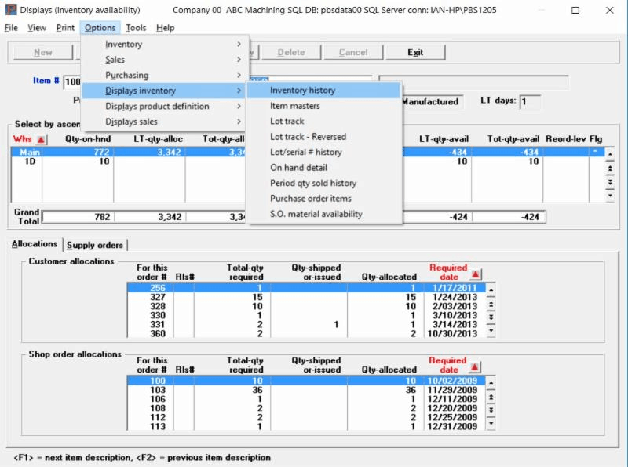
PBS™ was built to give small manufacturers the data-driven power of a tier-one factory, without the complexity. It calculates your true capacity, tracks job costs in real-time, and highlights bottlenecks before they cost you money.
If you’re constantly reacting instead of planning, running out of materials during production, or can’t easily track true costs, PBS™ Manufacturing ERP can help you streamline and improve profitability:
- Better planning tools to have materials on hand when needed for on-time deliveries.
- Increase productivity with less effort. Reduce or eliminate redundant data entry and minimize errors.
- Track fluctuating material prices and maintain preferred and alternative vendor sources. This allows you to adjust pricing in time to help protect margins.
Want to see where your shop is losing efficiency? Book a quick, zero-pressure demo to see our small-manufacturing ERP solution in action. Then let our experts help you analyze how to improve your inefficiency and achieve the success you want as an organization.
Explore PBS Manufacturing, an affordable yet robust system designed to serve the needs of small to midsized manufacturers. Or, contact us – we are here to help.