Why Small Manufacturers Miss Delivery Dates and How to Prevent Them
Missing a delivery date doesn’t usually happen because one big thing went wrong.
It’s often several small issues that build on each other. A supplier is late delivering materials. A work center gets backed up. A rush order changes the schedule. Before long, production falls behind, and customers are waiting longer than expected.
The good news is that many of these problems can be avoided.
With better planning and better visibility into your operation, it’s easier to keep production moving and improve on-time deliveries. That’s one reason many companies invest in small business manufacturing software.
PBS Manufacturing is a modular solution custom-tailored to your needs, providing visibility into your processes to help improve efficiency and profitability.
Here are five reasons small manufacturers miss delivery dates.
Parts Aren’t Available
Production can’t move forward without the right materials.
If inventory records aren’t accurate or purchasing doesn’t know materials are running low, employees may be ready to work while production waits for parts to arrive.
Sometimes the delay is only a day or two. Other times, one missing component can hold up an entire order.
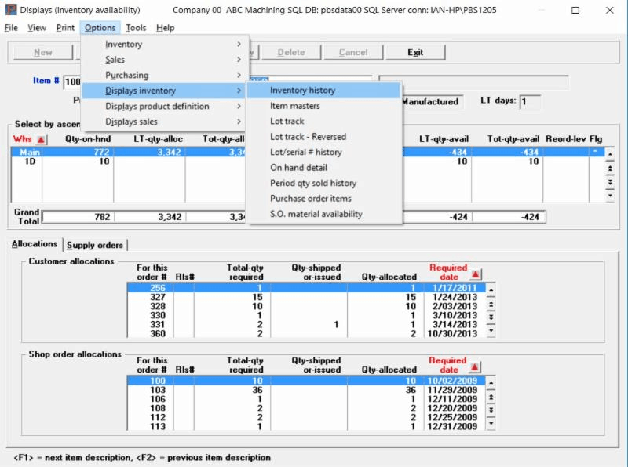
Knowing what materials you have, what you’ve already committed to jobs, and what still needs to be purchased helps prevent these delays before they happen.
Production Schedules Change
As new jobs come in, production schedules change. One machine may suddenly have too much work while another has available capacity.
Without a clear view of what’s happening across the shop floor, bottlenecks are easy to miss until they’re already affecting delivery dates.
Production scheduling shouldn’t be a guessing game. Managers need to see which jobs are scheduled, where work is piling up, and whether customer deadlines are still realistic.
When schedules are easier to manage, it’s easier to keep jobs moving and avoid unnecessary delays. Effective manufacturing software for small businesses gives managers a clearer view of production schedules so they can identify bottlenecks, adjust priorities, and keep jobs moving.
Jobs Don’t Start on Time
Even a small delay at the beginning of production can affect the entire schedule.
A work order may be missing information. A Bill of Materials (BOM) may need to be updated. Materials may still be on order. Employees may spend valuable time tracking down information instead of building products.
The longer production waits to get started, the harder it becomes to make up lost time.
Keeping inventory, purchasing, Bills of Materials, and shop orders connected helps ensure jobs are ready when production is scheduled to begin.
Rush Orders
Every manufacturer has customers who occasionally need an order sooner than expected.
While it’s important to take care of customers, moving one job to the front of the schedule often pushes several others back.
Constant schedule changes can create confusion on the shop floor, increase overtime, and make delivery dates harder to predict.
Having a clear production schedule helps managers understand how moving one job will affect the rest of the workload before making changes.
An Incomplete Picture
Many small manufacturers still rely on spreadsheets, paper documents, or separate systems to manage different parts of the business.
The problem isn’t just entering information multiple times. It’s that no one has a complete picture of what’s happening.
Questions like these become harder to answer:
- Is the job still on schedule?
- Are all the materials available?
- Has purchasing ordered everything that’s needed?
- Which customer orders are at risk of being delayed?
Without good visibility, small problems often aren’t discovered until they’ve already affected production.
When inventory, purchasing, production, and shop activity are connected in small business manufacturing software, managers can identify potential issues sooner and make better decisions before schedules fall behind.
Up-to-date Information
Passport Software helps manufacturers gain better visibility into inventory and purchasing with flexible solutions designed to fit the way they do business.
Many missed delivery dates can be avoided when everyone is working with accurate, up-to-date information.
Instead of relying on spreadsheets or disconnected systems, PBS™ manufacturing software for small businesses helps companies manage inventory, purchasing, bills of materials, shop orders, and production scheduling from one system.
That makes it easier to plan ahead, respond to changes, and keep production on track.
As your business grows, the processes that once worked can become harder to manage. Small business manufacturing software gives manufacturers better visibility into inventory, production schedules, and purchasing so they can spot potential problems before they affect delivery dates.
When you can see issues early, you’re in a better position to keep orders moving, improve on-time delivery, and provide the level of service your customers expect.
See how PBS Manufacturing can help small manufacturers gain better visibility and stay ahead of production problems. Or contact us – we are here to help.